
request an appointment
Toll Free – 800 4272
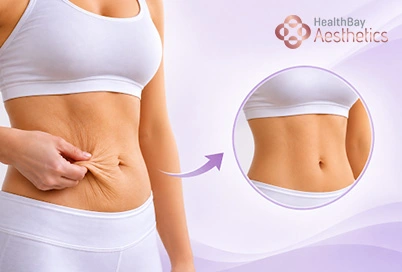
Skin laxity after weight loss happens when skin that was stretched over a larger body cannot fully retract as fat volume drops, because its collagen and elastin fibres have been strained and weakened. Mild to moderate laxity can often be improved with non-surgical skin tightening, such as radiofrequency microneedling for the body, laser-assisted tightening and collagen-stimulating treatments, usually once your weight has been stable for a few months. Significant overhanging skin generally responds best to surgical procedures such as a ttummy tuck or thigh lift. The right option depends on how much skin you have, where it is, and how much weight you have lost.
Losing weight is a real achievement, yet many people are surprised by what they see next: skin that looks loose, crepey or creased where their body used to be fuller. If you are wondering why your skin has not “bounced back”, you are far from alone. Skin laxity is one of the most common concerns patients raise after weight loss, whether it followed a lifestyle change, a medical weight-loss programme or bariatric surgery.
The good news is that loose skin is not something you simply have to accept. Understanding why it happens makes it much easier to choose a treatment that fits your skin, your goals and your timeline. This guide explains the causes of skin laxity after weight loss, when it may improve by itself, and the non-surgical and surgical skin tightening solutions available in Dubai.
Skin laxity means a loss of firmness and elasticity that allows skin to hang, fold or look crinkled. After weight loss it commonly appears as:
It is a cosmetic concern for most people, but it can also cause practical discomfort. Larger skin folds can trap moisture and lead to rubbing, irritation or rashes, and some people find exercise less comfortable. If you notice persistent irritation, it is worth mentioning at your consultation.
Skin is remarkably adaptable. When the body gains weight over a long period, the skin stretches to cover the additional volume. Collagen and elastin, the proteins that give skin its strength and its ability to spring back, are placed under strain. When the weight comes off, skin may not be able to contract fully, especially if those fibres have been stretched for years.
Several factors work together:
| Factor | Why it matters for loose skin |
|---|---|
| Amount of weight lost | Losing weight raises the chance of having more excess skin. |
| Speed of weight loss | Skin has less time to adjust when weight loss occurs quickly. This involves rapid weight loss with weight-loss drugs and following bariatric surgery. |
| How long the weight was carried | Skin stretched for many years usually has less ability to retract. |
| Age | Collagen and elastin production slows naturally over time, so older skin recovers less readily. |
| Genetics | Some people are simply born with skin that is more or less elastic. |
| Sun exposure and smoking | Both break down collagen and elastin, which is a particular consideration in Dubai’s strong sunshine. |
| Loss of the fat layer | Fat gives skin underlying support. When it reduces, the skin above can look emptier and less taut. |
| Nutrition and hydration | Skin needs adequate protein and nutrients to maintain and repair its structure. |
It is also worth knowing that stretch marks and skin laxity often appear together, since both reflect strain on the dermis. If this is a concern for you, our guide to stretch marks: causes and treatments explains how they are managed.
Loose skin can appear anywhere, but certain areas are affected more often because they hold more fat and are subject to gravity:
The area, together with the degree of laxity, is what mainly determines which treatment will work best.
Sometimes, partly. Skin can continue to adapt for many months after weight loss, particularly in younger people who have lost a moderate amount of weight at a steady pace. However, skin that has been stretched significantly or for a long time rarely returns to its original state without help. Treatments, patience and healthy habits tend to work better together than waiting alone.
If your weight has been stable for several months and the skin still looks loose, it is reasonable to explore your options.
Timing matters. Most clinicians prefer your weight to be stable before beginning skin tightening, because further weight loss can undo or alter the results.
Your doctor will advise on the right timing for you after assessing your skin and your weight history.
There is no single best treatment for loose skin. The most suitable approach depends on how lax the skin is, which area is affected and how much fat remains. Here is how the main options work.
Good habits will not tighten heavily stretched skin on their own, but they support every other treatment:
Firming creams may improve surface texture and hydration, but they cannot reach the deeper layers where laxity occurs, so any effect on loose skin is modest.
Radiofrequency (RF) microneedling combines fine needles with radiofrequency energy that heats the deeper layers of skin. This controlled heat stimulates your own collagen and elastin production, gradually improving firmness and texture. It is well suited to mild to moderate laxity on the body, including the abdomen, arms and thighs, and is also used on the face.
At HealthBay Aesthetics, options include Morpheus body microneedling and Infini body microneedling. A course of sessions is usually recommended, with improvement building gradually over the following months.
For areas where loose skin is combined with small pockets of stubborn fat, such as the jawline, neck, upper arms or abdomen, minimally invasive laser treatment can be an effective option. EndoliftX delivers laser energy beneath the skin through very small entry points to tighten tissue and encourage new collagen, with no surgical incisions. It is generally best suited to mild to moderate laxity rather than large amounts of hanging skin.
If weight loss has left your lower face or neck looking softer, focused ultrasound can lift and firm without surgery. Ultherapy sends ultrasound energy to the deeper structural layers of the skin to trigger collagen renewal, with results developing over the following months. Where a double chin is part of the picture, a dedicated double chin treatment can be combined into the plan.
Biostimulating treatments aim to improve the quality of the skin itself rather than remove or lift tissue. Sunekos Body is designed to support the skin’s own collagen and elastin and can help improve the texture of crepey, thinned skin on the body. These treatments work best for early or mild changes and as part of a combined plan.
Sometimes loose-looking skin is partly caused by small, stubborn fat deposits that did not respond to diet and exercise. Fat dissolving injections can reduce small, localised pockets, while liposuction suits larger areas. Neither is a weight-loss method, and neither tightens skin on its own, so they are usually planned alongside a tightening treatment.
When skin hangs in folds or has lost most of its elasticity, non-surgical energy-based treatments cannot remove the excess. In these cases, surgery is the most reliable solution because it physically removes surplus skin and repositions tissue. Common procedures include:
Use this table as a starting point. A personal consultation is the only way to confirm what suits your skin.
| Degree of laxity | Typical appearance | Options to discuss | Downtime |
|---|---|---|---|
| Mild | Slight crepiness, early softening, minor loss of firmness | RF microneedling, skin boosters, lifestyle support | Minimal |
| Mild to moderate | Noticeable looseness with or without small fat pockets | EndoliftX, Ultherapy (face and neck), RF microneedling, fat dissolving | Minimal to short |
| Moderate to severe | Visible folds, overhanging skin, little elasticity left | Surgical procedures, sometimes combined with non-surgical treatment | Longer recovery |
1. Why do I have loose skin after losing weight?
Skin stretches to accommodate weight gain, and the collagen and elastin fibres that give it elasticity can become weakened. After weight loss, the skin may not retract fully, particularly if you lost a lot of weight, lost it quickly, or carried the weight for many years.
2. Will loose skin go away on its own?
It may improve partially over several months, especially with moderate weight loss and younger skin. Significant laxity rarely resolves completely without treatment.
3. How much weight loss causes loose skin?
There is no fixed number. Loose skin is more likely and more noticeable after larger and faster weight loss, but it can also appear after moderate loss, depending on age, genetics and skin quality.
4. Can I prevent loose skin while losing weight?
It cannot be guaranteed, but you can reduce the risk. Losing weight gradually, building muscle through strength training, eating enough protein, staying hydrated, protecting your skin from the sun and avoiding smoking all help your skin adapt.
5. Do skin tightening creams work for loose skin?
Creams may improve hydration and surface texture, but they cannot reach the deeper layers where laxity develops. Their effect on loose skin after weight loss is limited.
6. What is the best non-surgical treatment for loose skin after weight loss?
There is no single best option. Radiofrequency microneedling, laser-assisted tightening, ultrasound tightening for the face and neck, and collagen-stimulating treatments are all used, and the best choice depends on the area and the degree of laxity.
7. When can I start skin tightening treatment after losing weight?
Most specialists prefer your weight to be stable first. For non-surgical treatments this is often around three to six months, and surgeons commonly recommend waiting longer. Your doctor will confirm the right time for you.
8. Can non-surgical treatments replace surgery?
For mild to moderate laxity, they can deliver a noticeable improvement. They cannot remove large amounts of hanging skin, so when excess skin is significant, surgery is usually the more effective solution.
9. Can facial laxity after weight loss be treated?
Yes. Depending on severity, options range from ultrasound and RF-based tightening to minimally invasive laser treatment and, for pronounced sagging, a facelift. A tailored plan often combines more than one approach.
10. How many sessions will I need?
This varies by treatment, area and the degree of laxity. Many tightening treatments are delivered as a course of sessions, and improvement continues to build as collagen renews. Your specialist will outline the expected plan at your consultation.
Loose skin after weight loss is a common concern, but the right approach depends on the amount of excess skin, its location and individual skin characteristics. Exercise, nutrition and stable weight management support overall health, while professional treatments may help address skin laxity when lifestyle measures are not sufficient.
At HealthBay Aesthetics, treatment recommendations are based on individual skin concerns and aesthetic goals. Options such as Morpheus Body may be considered for selected cases of post-weight-loss skin laxity, while more significant excess skin may require surgical assessment.
A professional consultation can help identify the most appropriate approach for improving skin firmness and body contours.
Ready to address post-weight-loss skin laxity? Book an appointment at HealthBay Aesthetics for a professional skin assessment and personalised recommendations to support your aesthetic goals.
Book an Appointment