
request an appointment
Toll Free – 800 4272
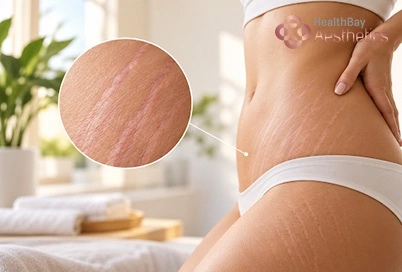
Stretch marks develop when the skin stretches rapidly due to pregnancy, puberty, weight changes, or muscle growth. Treatments such as microneedling, radiofrequency, and laser therapy may improve their appearance, although complete removal is unlikely. A dermatologist can recommend suitable options based on your skin and the age of the marks.
Few skin concerns are as common, or as quietly distressing, as stretch marks. They often appear during life changes: a pregnancy, a growth spurt, a fitness journey or a period of weight change. Many people notice them for the first time in the mirror and wonder what went wrong, or what they could have done differently.
The honest answer is that stretch marks are largely a matter of skin biology, genetics and timing. They are not a sign of poor skincare or poor health. Understanding what causes them, why they change colour over time and which treatments have real evidence behind them helps you make realistic, confident decisions.
This guide covers what stretch marks are, why they form, whether they can be prevented, and which treatments can help, including what to expect from each.
Stretch marks, medically known as striae distensae, are narrow lines that develop when the skin stretches rapidly or hormonal changes affect its structure.
Stretch marks change over time, and the stage they are in strongly affects how well they respond to treatment.
Striae rubra (early or red stage). New stretch marks usually look red, pink, purple or dark brown, depending on skin tone. They may be slightly raised, itchy or sensitive. At this stage the area is still inflamed and has a blood supply, which is why it looks coloured. This is generally the best window for treatment.
Striae alba (mature or white stage). Over months to years, the marks fade to white, silver or a lighter shade than the surrounding skin. They often look flat or slightly sunken, and the skin may look thin and crinkled. They have fewer blood vessels and less pigment, so they are more stubborn and need more sessions, and results are usually more modest.
Several factors combine to cause stretch marks, and some people are simply more prone to them than others.
Many women develop stretch marks, most often on the abdomen, breasts, hips and thighs, in the second half of pregnancy. Rapid skin stretching and hormonal changes both play a role.
Fast growth during adolescence commonly causes stretch marks on the thighs, hips, lower back and breasts, and in boys, on the shoulders and back.
Quick changes in body size can stretch the skin faster than it can adapt, whether the change is gradual weight gain over a short period, post-surgery weight loss or weight-loss medication.
Bodybuilding and heavy strength training can produce stretch marks on the shoulders, chest, arms and thighs as muscle mass increases.
If your mother or sisters developed stretch marks, you are more likely to as well. Genes influence how strong and elastic your skin is.
Long-term use of strong steroid creams, or steroid tablets and injections, can thin the skin and weaken collagen, making stretch marks more likely.
Conditions that raise cortisol, such as Cushing’s syndrome, and connective tissue disorders, such as Marfan syndrome and Ehlers-Danlos syndrome, can cause widespread or unusual stretch marks.
Breast surgery or implants, and some skin or hormonal treatments, can contribute.
Most stretch marks are purely cosmetic. But if you develop many stretch marks suddenly, especially without obvious weight change or pregnancy, or they appear alongside symptoms such as easy bruising, unexplained weight gain, high blood pressure or muscle weakness, speak to a doctor. They may point to an underlying hormonal or medical issue that deserves checking.
Stretch marks can develop wherever the skin is stretched, but they are most common on the:
The location often hints at the cause. Abdomen, breasts and hips are typical in pregnancy, lower back and thighs in adolescence, and shoulders and arms in muscle building.
Anyone can, but you are more likely to if you:
This is one of the most common questions, and the honest answer is: only partly.
No cream, oil or home remedy has been shown to reliably prevent stretch marks. Some studies of ingredients such as hyaluronic acid and centella asiatica show small benefits, but the evidence is limited and results are inconsistent. Cocoa butter and many oils have not shown clear preventive benefit in good-quality studies.
What may help:
Because genetics matter so much, some people develop stretch marks despite doing everything right. It is not a failure on your part.
No treatment erases stretch marks entirely, and results vary from person to person. The aim is to improve colour, texture and visibility. Most treatments work by stimulating collagen and encouraging the skin to remodel itself, and most need several sessions.
Prescription retinoids may improve early stretch marks, while moisturising creams help hydrate the skin. Retinoids should be avoided during pregnancy.
Infini microneedling uses fine needles to stimulate collagen and elastin production, helping improve the appearance and texture of stretch marks.
Radiofrequency microneedling, such as Morpheus, combines fine needles with heat energy to stimulate collagen remodelling and improve skin firmness.
Fractional lasers, such as Fraxel, stimulate collagen production to improve skin texture and reduce the visibility of stretch marks.
These laser treatments target redness in newer stretch marks, while selected treatments may help improve colour differences in older marks.
PRP uses platelets from your own blood to support skin renewal and may be combined with microneedling to improve stretch marks.
Chemical peels help improve skin texture and tone, while mesotherapy delivers selected substances into the skin.
| Treatment | Best for | Typical downtime | Sessions |
|---|---|---|---|
| Prescription topicals | Early red marks | None | Daily use over weeks |
| Microneedling | Red and white marks, many skin tones | 1–2 days of redness | Several |
| Radiofrequency microneedling | Mature marks, looser skin | 1–3 days | Several |
| Fractional laser | Mature marks, texture | A few days of redness | Several |
| Vascular laser | Red and purple marks | Minimal | Several |
| PRP | Supporting skin renewal | 1–2 days | Several |
| Peels and mesotherapy | Mild marks, texture | Minimal | Several |
Downtime and session numbers vary by device, settings and the individual. Your dermatologist will give you specifics after an assessment.
The best option depends on several factors:
A proper skin assessment is the single most important step. Two people with stretch marks in the same place may need completely different plans.
Realistic results. Treatment can soften colour, smooth texture and make stretch marks less noticeable. It rarely makes them vanish. Early marks generally respond better than old ones.
Multiple sessions. Most plans involve a series of treatments spaced several weeks apart, since collagen remodelling takes time. Visible results often build gradually over months.
Comfort. Numbing cream is commonly used, and most people describe the sensation as tolerable, though it varies by treatment.
Aftercare. Typical advice includes avoiding strong sun exposure, using sunscreen, keeping the skin moisturised, avoiding harsh products for a short period and following your clinician’s instructions.
Possible side effects. These can include redness, swelling, temporary dryness or flaking, and, less commonly, pigment changes, infection or scarring. Choosing an experienced clinician and following aftercare reduces these risks.
Your clinician may advise delaying or avoiding treatment if you:
Always share your full medical history during consultation.
Home care cannot erase stretch marks, but it supports skin health and any professional treatment:
For some people, stretch marks are simply a part of their story and cause no distress. For others, they affect how comfortable they feel in swimwear, at the gym or in everyday clothes. Both feelings are valid. Treatment is a personal choice, not an obligation, and a good clinician will talk through your goals without pressuring you.
If stretch marks are affecting your confidence, speaking with a specialist can help you understand what is realistic and what suits your skin.
Consider an assessment if:
Early assessment gives you more options, since newer marks respond best.
1. What causes stretch marks?
Stretch marks form when the skin is stretched quickly or weakened by hormones, damaging collagen and elastin in the dermis. Common triggers include pregnancy, puberty, rapid weight change, muscle building, genetics and long-term steroid use.
2. Are stretch marks permanent?
Stretch marks do not disappear completely. They usually fade from red or purple to white or silver over time, and treatment can make them look less noticeable, but complete removal is unrealistic.
3. Can stretch marks be prevented?
There is no proven way to prevent them. Gradual weight change, good hydration and regular moisturising support skin health, but genetics play a large role, so some people develop them regardless.
4. Which treatment works best for stretch marks?
It depends on the stage, colour, location and your skin tone. Red marks often respond to vascular lasers and early topical treatment, while white marks may benefit from microneedling, radiofrequency and fractional laser. A dermatologist can recommend the right approach.
5. Do creams really work for stretch marks?
Most over-the-counter creams and oils offer little proven benefit. Prescription retinoids may help early marks but are not safe in pregnancy or breastfeeding. Professional treatments generally give more noticeable results.
6. Are old stretch marks harder to treat than new ones?
Yes. Mature white marks have less blood supply and pigment and are generally more resistant than early red or purple marks, so they need more sessions and results tend to be more modest.
7. How many sessions will I need?
Most plans involve several sessions spaced weeks apart, because collagen renewal is gradual. The number depends on the treatment, the size of the area and the age of the marks.
8. Is stretch mark treatment safe for darker skin?
Yes, with the right approach. Darker skin tones have a higher risk of pigment changes with some lasers, so treatment selection and settings should be chosen carefully by an experienced clinician.
9. Can I have treatment during pregnancy or breastfeeding?
Most stretch mark treatments, including retinoids and many energy-based procedures, are postponed until after pregnancy and breastfeeding. Speak to your doctor about what is safe.
10. Do men get stretch marks?
Yes. Men develop them too, commonly from growth spurts, rapid weight changes or muscle building, often on the shoulders, back, arms and thighs.
Stretch marks are a natural skin concern that may fade over time. Treatments such as microneedling, radiofrequency and laser therapy can help improve skin texture and reduce their visibility. Consulting a dermatologist helps you choose the right approach for your skin.
At HealthBay Aesthetics in Dubai, you can explore personalised treatment options for stretch marks. Request an appointment to discuss your skin concerns and suitable treatments.
Book an Appointment