
request an appointment
Toll Free – 800 4272
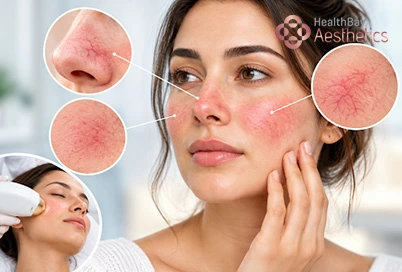
Lasting facial redness may result from rosacea, sun damage, irritation or other inflammatory skin conditions. Thread veins, commonly called broken capillaries, occur when tiny superficial blood vessels remain widened. Treatment typically begins with identifying the cause, followed by suitable skincare, sun protection and, when appropriate, laser or light-based procedures.
Have you noticed persistent redness across your cheeks, tiny red lines around your nose or small blood vessels that remain visible even when your skin feels comfortable? These changes can occur for several reasons, ranging from environmental triggers to underlying dermatological conditions.
Redness can appear briefly after exercise, heat or an irritating product, but when it lingers or fine vessels stay visible, the vessels are usually dilated rather than physically ruptured. Knowing the difference between temporary flushing, persistent redness and visible vessels makes it easier to choose the right approach to care.
This guide explains the causes, symptoms, diagnosis and treatment options for facial redness and broken capillaries in Dubai.
Facial redness and thread veins are related but different concerns.
Facial redness: Diffuse pinkness or redness across areas such as the cheeks, nose or chin. It may fluctuate throughout the day.
Thread veins: Fine red, pink or purple lines caused by widened superficial blood vessels. They often remain visible around the nostrils, cheeks and chin.
Some people experience both concerns, particularly when rosacea is present. A professional assessment helps determine the underlying cause and appropriate treatment.
Repeated exposure to ultraviolet radiation can cause lasting sun damage and contribute to persistent redness and visible superficial vessels.
What may help: Apply broad-spectrum sunscreen with SPF 30 or higher, wear protective clothing and seek shade when possible. Existing visible vessels may require targeted treatment.
Rosacea is a chronic inflammatory skin condition that commonly affects the central face. Symptoms may include recurring flushing, persistent redness, visible blood vessels and, in some individuals, acne-like bumps.
Common triggers include:
What may help: Management may include prescription medication, gentle skincare, sun protection and selected vascular procedures. A dermatologist can recommend suitable options.
Some people naturally have more visible superficial vessels or a greater tendency to develop facial flushing. Family history and individual skin characteristics may influence how noticeable these changes become.
Although genetic predisposition cannot be changed, suitable skincare and professional treatment may help manage the appearance of visible vessels.
Moving between hot outdoor conditions and air-conditioned environments can trigger changes in blood flow near the skin's surface. This may cause temporary redness, particularly across the cheeks and nose.
What may help: Use lukewarm water, avoid excessive heat where possible and identify personal triggers.
Strong exfoliating acids, abrasive scrubs, fragranced products and excessive cleansing may irritate sensitive skin.
Symptoms can include burning, stinging, dryness and temporary redness. Irritation does not necessarily mean permanent blood vessel damage.
What may help: Use a gentle cleanser and fragrance-free moisturiser. Introduce active ingredients gradually and discontinue products that repeatedly cause irritation.
Over time, changes in skin structure and cumulative environmental exposure may make superficial blood vessels more noticeable, particularly around the nose and cheeks.
However, new or persistent redness should not automatically be attributed to ageing.
Prolonged or inappropriate use of topical corticosteroids on the face may cause skin thinning and visible blood vessels.
These medications can be beneficial for certain conditions when prescribed correctly. Consult the prescribing clinician before changing or discontinuing treatment.
Contact dermatitis, other inflammatory skin conditions, medication reactions and cosmetic product sensitivities may also cause facial redness. Skin patch testing can help identify the trigger.
Seek professional assessment if redness develops suddenly, spreads rapidly, becomes painful or occurs alongside unusual symptoms.
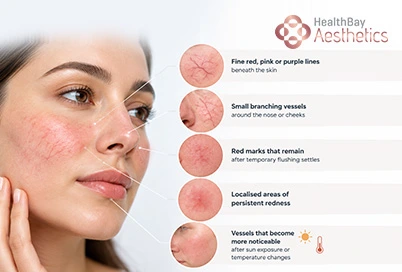
| Feature | Broken capillaries | General facial redness |
|---|---|---|
| Appearance | Fine red or purple lines | Diffuse pinkness or redness |
| Pattern | Often localised | May cover a broader area |
| Duration | Individual vessels often remain visible | May be temporary or persistent |
| Possible causes | Sun damage, rosacea and vascular changes | Heat, irritation, rosacea and inflammation |
| Treatment approach | May involve targeted vascular procedures | Depends on the underlying cause |
Some people experience both concerns simultaneously, so identifying each component helps guide treatment.
The right treatment depends on the cause of redness, the visibility of blood vessels and the individual's skin condition.
Vascular lasers target haemoglobin within superficial blood vessels, helping reduce their visibility. At HealthBay Aesthetics, Candela GentleMax laser treatment may be considered for suitable cases. Vascular lasers may be suitable for selected visible vessels and certain vascular skin concerns.
Results vary depending on vessel size, depth and skin type. Multiple sessions may be needed, and temporary redness, swelling or pigmentation changes can occur.
IPL uses controlled pulses of light to target superficial blood vessels and may help reduce diffuse redness in suitable candidates.
Suitability depends on skin tone, the underlying condition and the device used. Multiple sessions may be required.
When redness is associated with rosacea, a dermatologist may recommend prescription medication, trigger management and appropriate skincare.
These approaches help manage inflammation and flare-ups, although established visible blood vessels may require additional treatment.
A simple skincare routine can help reduce irritation and support the skin barrier. Soothing in-clinic options such as Dermalux LED therapy may also support sensitive skin.
Consider using:
Skincare can improve comfort but generally cannot eliminate established visible blood vessels.
If redness results from eczema, contact dermatitis or another inflammatory condition, treatment should address the underlying diagnosis.
Avoid self-prescribing steroid creams, as inappropriate use may worsen certain facial conditions.
Laser and light-based treatments require individual assessment. Skin tone, tanning, medical history and the risk of pigmentation changes can influence treatment selection.
Before proceeding, discuss your skin concerns, current medications, previous treatment reactions and recent sun exposure with a qualified clinician. A patch test may be recommended in selected cases.
Although not every case can be prevented, certain habits may help reduce avoidable irritation and recurrent flushing.
Apply broad-spectrum sunscreen daily and reapply according to product instructions, particularly after sweating or swimming. Hats and shade provide additional protection.
If heat, alcohol, spicy foods or intense exercise repeatedly trigger flushing, record the pattern and discuss it with your clinician. Avoid unnecessary restrictions if a particular trigger does not affect you.
Avoid combining multiple strong exfoliants or introducing several active products simultaneously. A gentle routine is particularly important when the skin frequently stings or feels hot.
Professional assessment can help identify rosacea or another underlying condition. Appropriate management may improve symptoms, although it cannot guarantee that new vessels will never appear.
Consider arranging a consultation if facial redness persists, visible vessels become more prominent or symptoms interfere with daily life.
Professional assessment is particularly important when redness is accompanied by burning, recurrent inflammatory bumps, swelling or increasing sensitivity.
Seek prompt medical attention for eye pain, significant light sensitivity or changes in vision. Sudden facial redness accompanied by breathing difficulty or swelling of the lips or tongue requires emergency care.
1. What causes broken capillaries on the face?
Visible facial vessels may be associated with rosacea, sun exposure, genetic factors and repeated environmental triggers. A dermatologist can assess the pattern and identify the likely cause.
2. Can facial redness disappear naturally?
Temporary flushing may settle once its trigger passes. Persistent redness caused by rosacea or established visible vessels may require appropriate treatment.
3. Which treatment is best for visible blood vessels on the cheeks?
Vascular laser treatment or IPL may help, depending on the vessel characteristics, diagnosis and skin type.
4. How many laser sessions are needed?
The number varies according to the treatment device, vessel size, depth and affected area. Some people improve after one session, while others need several treatments.
5. Can rosacea cause visible blood vessels?
Yes. Rosacea may cause persistent facial redness and visible superficial blood vessels, particularly around the nose and cheeks.
6. Does sunscreen help prevent facial redness?
Sunscreen protects against UV damage, which can aggravate rosacea and contribute to visible vessels. It does not remove established vessels, but regular use supports long-term skin health.
7. Can skincare products remove broken capillaries?
Skincare products may help reduce irritation and support the skin barrier, but they generally cannot eliminate established visible blood vessels.
8. Can broken capillaries return after treatment?
Yes. Treated vessels may become less visible, but new vessels can develop over time. Ongoing management depends on the underlying condition and individual needs.
Persistent redness and visible superficial blood vessels can develop for several reasons, including rosacea, sun exposure, environmental triggers and skin sensitivity.
Gentle skincare, appropriate sun protection and trigger management can support skin health, while selected medical treatments may reduce persistent redness or visible vessels.
At HealthBay Aesthetics, a professional consultation can help assess your concerns and determine whether medical management, vascular laser treatment or IPL may be suitable for your individual needs.
Concerned about persistent facial redness or visible blood vessels? Book a consultation with HealthBay Aesthetics to discuss your skin concerns and receive guidance on suitable treatment options.
Book an Appointment