
request an appointment
Toll Free – 800 4272
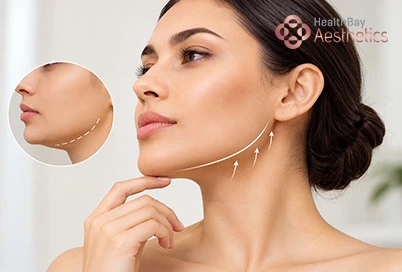
Yes, you can get a more defined jawline without surgery. The most effective non-surgical options are dermal fillers to add structure along the jaw, fat-dissolving injections to reduce fullness under the chin, skin-tightening treatments to firm and lift loose skin, and muscle-relaxing injections to refine the lower face. The right choice depends on what is softening your jawline: lost volume, excess fat, loose skin or muscle bulk. A consultation with a qualified aesthetic doctor is the best way to find out which applies to you.
A sharp, well-defined jawline is one of the facial features that can influence overall facial balance. It frames the lower face, complements the cheeks and chin, and contributes to a more defined appearance. However, ageing, changes in skin elasticity, fat distribution and genetics can make the jawline appear less prominent over time.
The good news is that surgery is not the only option. Modern non-surgical aesthetic treatments may help improve jawline definition, address under-chin fullness and improve the appearance of mild skin laxity. This guide explains the common causes of a less defined jawline, available treatment options and what to consider before choosing a procedure.
Several factors can affect the appearance of the jawline. In many cases, more than one factor contributes to changes in the lower face.
Dermal fillers are injectable treatments that can improve facial contours by adding volume in selected areas. Certain hyaluronic acid fillers may be used along the jawline or chin to enhance definition and improve facial proportions.
How they work: A qualified medical professional places the filler at carefully selected points to improve contour, support chin projection or create a more structured appearance.
Potential benefits include:
Results are temporary and vary depending on the product, treatment area and individual factors. Possible risks include swelling, bruising, infection and, rarely, serious vascular complications. Treatment should only be performed by an appropriately qualified medical professional.
Collagen-stimulating treatments, including Sculptra and Radiesse, work differently from traditional hyaluronic acid fillers. Depending on the product, they can stimulate collagen production and gradually improve skin support and facial contours.
Potential benefits: Gradual improvement in skin firmness and support, with results developing over weeks or months rather than appearing immediately.
May be considered for: Selected cases of early volume loss or mild skin laxity, following an individual assessment.
Fat-dissolving treatments may help reduce selected pockets of fat beneath the chin. Reducing under-chin fullness can make the transition between the jawline and neck appear more prominent.
Potential benefits: Improving the appearance of a double chin and enhancing the visible jaw-neck angle in suitable candidates.
Multiple sessions may be needed, depending on the treatment and individual response. Swelling and tenderness can occur after injections. A qualified practitioner should assess suitability and explain the risks before treatment.
Energy-based treatments, including radiofrequency and ultrasound-based procedures, may help improve the appearance of mild skin laxity by stimulating collagen remodelling. Certain laser treatments can also improve skin texture and firmness.
Potential benefits: Improving skin firmness and the appearance of early jowls without surgery. Results typically develop gradually and depend on the technology used, skin condition and treatment plan.
These treatments may be more appropriate when loose skin is the primary concern rather than substantial excess fat or a lack of underlying structural support.
In selected cases, muscle-relaxing injections into the masseter muscles may soften the appearance of a wide or square lower face. Treatment of certain neck muscles may also be considered when visible neck bands affect the jaw-neck contour.
Results generally develop over several weeks and are temporary. Suitability depends on muscle anatomy, facial proportions and the intended outcome. Potential side effects and the possibility of changes in chewing function should be discussed with a qualified medical professional.
Lifestyle habits cannot change the underlying jawbone structure or replace an indicated aesthetic procedure. However, they can support general health and skin quality.
The most suitable treatment depends on the underlying cause of reduced jawline definition. Different approaches address different concerns, so an individual assessment is important before making a decision.
| Your Main Concern | Suitable Options | Typical Results Timeline |
|---|---|---|
| Soft or weak jawline, lost volume | Dermal fillers, biostimulators | Immediate (fillers) to gradual (biostimulators) |
| Fullness under the chin | Fat-dissolving injections | Gradual, usually over multiple sessions |
| Loose skin and early jowls | Skin-tightening treatments, biostimulators | Gradual, over 2 to 3 months |
| Wide or square lower face | Muscle-relaxing injections | Within a few weeks |
| A combination of concerns | A personalised combination plan | Depends on the plan |
Some individuals may benefit from a combination of treatments. For example, a practitioner may consider contouring and skin-firming approaches when both volume loss and mild skin laxity are present. The suitability, sequence and spacing of treatments should be determined following a professional assessment.
Natural approaches may support skin health and general wellbeing, but they cannot reliably reshape the jawbone or selectively remove fat from the chin. The extent of improvement depends on the underlying cause of the concern.
If excess body fat contributes to fullness beneath the chin, gradual weight management may help some individuals. However, genetics influence fat distribution, and weight loss cannot target fat in a specific area.
A balanced diet provides nutrients that support normal skin function and overall health. No specific food or supplement can guarantee a sharper jawline or change facial bone structure.
Regular physical activity supports general fitness and healthy weight management. However, evidence that jaw exercises can produce lasting improvements in jawline definition is limited. Excessive chewing exercises may also cause discomfort or strain in the jaw muscles and joints.
Daily broad-spectrum sunscreen helps protect collagen and elastin from UV-related damage. Appropriate skincare can support skin health, although it cannot reverse substantial skin laxity.
Forward-head posture can affect how the chin and neck appear in certain positions. Improving posture may change their appearance in photographs or everyday viewing angles, but it does not permanently alter the underlying jaw structure.
1. What is the best non-surgical treatment for jawline definition?
The best option depends on the cause of reduced definition. Dermal fillers may improve contour and chin projection, skin-tightening procedures may address mild laxity, and suitable fat-reduction treatments may help with under-chin fullness. A qualified practitioner can recommend an appropriate option after assessing your facial structure.
2. Can jawline fillers make the face look slimmer?
Jawline fillers can improve contour and definition, but they add volume rather than remove fat. Depending on facial anatomy and the amount used, excessive filler may make the lower face look wider or heavier.
3. How long do non-surgical jawline treatments last?
Results vary by treatment, product and individual factors. Dermal fillers are temporary, while the duration of results from skin-tightening and fat-reduction procedures depends on the technique used and the individual’s response. Your practitioner can explain the expected duration for your treatment plan.
4. Are non-surgical jawline treatments safe?
All aesthetic procedures carry potential risks. Possible complications vary according to the treatment and may include swelling, bruising, infection or other procedure-specific effects. A qualified medical professional should explain the benefits, risks and alternatives before treatment.
5. Can I get a more defined jawline without losing weight?
Yes, depending on the underlying cause. Jawline appearance is influenced by genetics, bone structure, chin projection, muscle size, skin laxity and fat distribution. Some of these concerns may be addressed without weight loss.
6. How do I know which jawline treatment is suitable for me?
A consultation with a qualified aesthetic practitioner can help identify whether the main concern is related to facial structure, skin laxity, muscle size or excess fat. Recommendations should take your medical history, anatomy and aesthetic goals into account.
7. Can non-surgical jawline contouring improve facial symmetry?
Certain treatments, including dermal fillers, may improve the appearance of some facial asymmetries. Results depend on the underlying structure and individual suitability, and complete symmetry cannot be guaranteed.
8. Is there any downtime after non-surgical jawline treatment?
Downtime varies by procedure. Some treatments may cause temporary swelling, redness, tenderness or bruising, while others involve minimal recovery. Your practitioner should provide treatment-specific aftercare instructions.
9. At what age can you consider non-surgical jawline contouring?
Suitability depends on age, facial development, medical history and the proposed treatment. A qualified practitioner can assess whether a procedure is appropriate for the individual.
10. Can non-surgical jawline treatments prevent sagging as you age?
These treatments may improve the appearance of selected age-related changes, but they cannot stop the natural ageing process. Sun protection and appropriate skincare can help maintain skin health over time.
A more defined jawline does not always require surgery. Depending on your facial structure and individual concerns, non-surgical treatments may help improve contour, address mild skin laxity or reduce fullness beneath the chin.
The key is to choose a treatment that addresses the underlying cause rather than focusing on a particular trend or facial shape. A professional assessment can help you understand the available options, their limitations and the results you can realistically expect.
Looking to improve your jawline definition without surgery? HealthBay Aesthetics offers aesthetic care tailored to individual concerns and goals. A consultation can help determine which non-surgical options may be suitable for you.
Contact HealthBay Aesthetics to schedule a consultation and discuss your aesthetic goals with the team.
Book an Appointment