
request an appointment
Toll Free – 800 4272
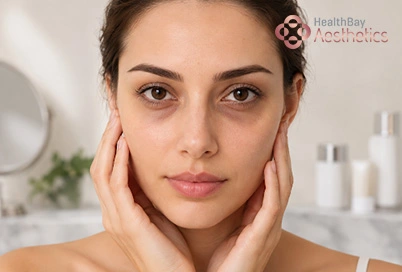
Dark circles have different causes, so the right treatment depends on what’s causing the darkness. Mild cases may improve with skincare, while some types need professional treatment.
Dark circles have different causes, so the right treatment depends on what's causing the darkness. Mild cases may improve with skincare, while some types need professional treatment.
Dark circles under the eyes are one of the most common reasons people seek skin and aesthetic treatments, but they're also one of the most misunderstood concerns. Many people try multiple eye creams without seeing results because under-eye darkness isn't caused by a single problem.
An eye cream that works beautifully for pigmentation will do very little for a shadow caused by hollowing, which is why so many people feel like they've "tried everything" without seeing real change.
At HealthBay Aesthetics, understanding the underlying cause is an important part of choosing the right approach. This guide explains why dark circles form, which treatments may help, and when it's time to see a dermatologist or aesthetic physician.
The skin under the eyes is thinner and more delicate than skin almost anywhere else on the face, with very little supporting fat. That thinness is exactly why the area shows discoloration, blood vessels, and shadows so readily. Several factors can contribute, often at the same time.
For many people, dark circles are simply inherited. Genetics can determine how thin the under-eye skin is, how close blood vessels sit to the surface, and how much melanin the skin in that area produces. If dark circles run in the family, they often appear early in life and are the hardest type to fully erase with skincare alone.
As the under-eye skin thins with age or sun exposure, the small blood vessels beneath it become more visible, creating a bluish, purple, or reddish tint. This is sometimes called a "vascular" dark circle, and it tends to look worse when a person is tired or dehydrated, since blood vessels dilate and become more prominent.
From the mid-to-late twenties onward, the face gradually loses fat and bone volume, including in the area just below the eye known as the tear trough. As that support diminishes, a visible hollow or groove forms, and the overhead angle of light casts a shadow into it. This is a structural cause, not a pigmentation issue, and it explains why some people have "dark circles" that are really just shadows.
Hyperpigmentation happens when the skin under the eyes produces and retains more melanin than the surrounding area. Sun exposure accelerates this, and repeated rubbing of the eyes - common with allergies or eczema - can trigger post-inflammatory pigmentation as well. Our pigmentation treatment page covers this in more depth.
Allergic reactions cause blood vessels around the eyes to dilate and can lead to persistent rubbing, both of which darken and thicken the skin over time. This pattern, sometimes called "allergic shiners," often comes with itching, puffiness, or a stuffy nose, and tends to fluctuate with allergy season.
Poor sleep, high stress, dehydration, smoking, and excessive alcohol or screen time won't create dark circles from nothing, but they reliably make an existing predisposition more visible by increasing fluid retention, reducing circulation, and making the skin look paler and thinner-textured.
Because dark circles have different root causes, the most effective plan usually matches the treatment to the specific type - pigmented, vascular, structural (hollowing), or a mix.
Below is a general overview, from lower-cost home measures through clinical procedures.
Vitamin C - brightens tone and supports collagen production
Topical treatments generally take 4-8 weeks of consistent use before any visible change, and they work best for mild pigmentation or vascular circles rather than structural hollowing.
Chemical peels - mild peels with glycolic or lactic acid can lighten pigmented dark circles and improve overall skin tone in the treated area.
Laser therapy - different laser wavelengths target excess melanin (pigmented circles) or stimulate collagen to thicken thin skin (vascular circles), so the right device depends on the underlying cause.
Dermal fillers (tear trough) - hyaluronic acid filler placed carefully in the tear trough can restore lost volume and soften the shadow created by hollowing - this addresses structural circles that skincare cannot fix.
Platelet-rich plasma (PRP) - PRP uses growth factors from the patient's own blood to support collagen and thicken the under-eye skin, often used alongside other treatments for a more natural result.
Combination protocols - many patients have more than one contributing cause, so a dermatologist or aesthetic physician may combine two or more of the above (for example, filler for volume plus a light peel for tone) after an in-person assessment.
A simple way people try to self-diagnose at home is by gently stretching the under-eye skin: if the darkness fades or disappears, it's likely a vascular (or structural/shadow) cause; if it stays the same, pigmentation is more likely. This can offer a clue, but it isn't a substitute for a professional assessment, since most cases involve more than one factor.
Dark circles are usually a cosmetic concern rather than a medical one - but certain patterns are worth a proper evaluation rather than more trial-and-error skincare. Consider booking a consultation if:
A dermatologist or aesthetic physician can examine the skin, rule out an underlying medical cause where relevant, and identify whether the circles are pigmented, vascular, structural, or mixed - which is the only reliable way to choose a treatment that will actually work for your case rather than guessing again.
1. Can dark circles be removed permanently?
Some causes, like tear trough hollowing, can be substantially and durably corrected with filler, though maintenance treatments are usually needed over time. Genetic or pigmentation-based dark circles can be significantly lightened but rarely erased completely, since they're influenced by ongoing factors like sun exposure and skin thickness.
2. How long does it take to see results from treatment?
Topical ingredients typically need 4-8 weeks of consistent use. In-clinic treatments like peels or laser sessions often show initial improvement within a few weeks, with full results after a course of sessions. Filler results are visible immediately, with final settling over about two weeks.
3. Are dark circles a sign of a health problem?
Usually not - they're most often related to genetics, thin skin, or lifestyle factors. However, sudden onset, one-sided darkening, or accompanying symptoms like swelling or vision changes warrant a medical evaluation to rule out an underlying cause.
4. What's the difference between dark circles and under-eye bags?
Dark circles refer to discoloration of the skin itself, from pigmentation or visible blood vessels. Under-eye bags refer to puffiness or swelling, usually caused by fluid retention or fat pad displacement, and are typically addressed with different treatments.
5. Do home remedies like cold compresses actually work?
They can offer short-term improvement for vascular and puffiness-related dark circles by temporarily constricting blood vessels and reducing fluid retention, but they won't resolve pigmentation or structural hollowing, which need targeted topical or in-clinic treatment.
6. Can dark circles be caused by dehydration?
Yes. Dehydration can make the skin under the eyes look duller and more sunken, making existing dark circles appear more noticeable. Drinking enough water can improve the overall appearance, although it will not correct pigmentation or tear troughs.
7. Can allergies make under-eye circles darker?
Yes. Allergies can contribute to under-eye darkness through congestion, blood vessel changes, and frequent eye rubbing. Treating the allergy and avoiding rubbing may help improve the appearance over time.
8. Can sunscreen prevent dark circles from getting worse?
Sunscreen can help prevent UV exposure from worsening pigmentation and premature skin changes around the eyes. A broad-spectrum sunscreen suitable for the eye area, combined with sun protection such as sunglasses, can be helpful.
9. Which dark circles respond best to skincare?
Skincare tends to work best when darkness is primarily caused by pigmentation or mild changes in skin quality. Structural shadows caused by significant tear trough hollowing generally require a different treatment approach.
10. How can I tell whether my dark circles are caused by pigmentation?
Pigmentation usually appears as a brown or darker discoloration on the skin itself. However, under-eye darkness can have several overlapping causes, so a professional assessment is more reliable than judging the color alone.
Because effective treatment depends entirely on identifying the correct cause, the most useful first step is an in-person consultation rather than another over-the-counter product.
At HealthBay Aesthetics in Dubai, our clinicians assess whether dark circles are driven by pigmentation, visible vasculature, volume loss, or a combination, and build a treatment plan from peels and lasers to tear trough filler or PRP - around what's actually happening in your skin.
Book a consultation to explore the right treatment for your dark circles.
Book an Appointment