
request an appointment
Toll Free – 800 4272
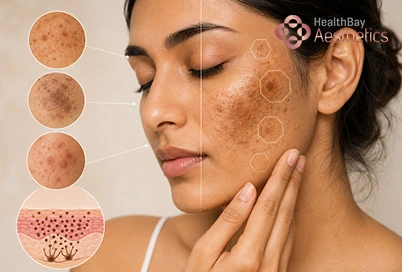
Pigmentation can be frustrating, especially when dark spots or uneven patches return after you have already invested time and effort into treating them. You may notice your skin becoming clearer after treatment, only to see pigmentation gradually reappear.
So, why does pigmentation keep coming back?
The answer is that pigmentation is often influenced by ongoing triggers rather than being a one-time skin problem. Sun exposure, hormonal changes, inflammation, acne, skin irritation and certain underlying conditions can stimulate melanin production again.
Understanding the cause of pigmentation is therefore just as important as treating the visible discolouration.
At HealthBay Aesthetics, pigmentation concerns are assessed according to the type, cause, skin condition and individual triggers before a suitable treatment plan is recommended.
Skin pigmentation refers to changes in the colour of the skin caused by melanin, the natural pigment responsible for skin colour.
When melanin is produced or distributed unevenly, darker areas can appear on the face or body. These may include:
Different types of pigmentation have different causes and may respond differently to treatment. For example, melasma can be strongly influenced by hormones and sunlight, while post-inflammatory pigmentation may develop after acne, irritation or skin injury.
For persistent or recurring pigmentation, professional assessment can help identify the likely trigger and determine an appropriate treatment approach.
One of the most common reasons pigmentation returns is ongoing exposure to ultraviolet radiation.
UV exposure stimulates melanocytes, the cells responsible for producing melanin. Even after pigmentation has improved, repeated sun exposure can trigger increased melanin production and cause dark spots to return.
This is particularly important in Dubai, where strong sunlight and outdoor exposure can make pigmentation management challenging.
HealthBay Aesthetics also highlights sun protection as an essential part of maintaining pigmentation-treatment results.
Melasma is one of the pigmentation conditions that commonly comes back.
It typically appears as irregular brown or greyish patches on areas such as the cheeks, forehead, nose and upper lip. Hormonal fluctuations, sun exposure and genetic factors can contribute to its development.
Even when treatment reduces visible pigmentation, the underlying triggers may remain. This is why melasma is often managed as an ongoing condition rather than something that can simply be treated once and forgotten.
Dubai's year-round sun and high heat are two of the strongest pigmentation triggers there are. Even brief, unprotected exposure, walking to your car, sitting near a sunny window, can reactivate melanocytes and undo weeks of treatment progress. This is a major reason skin that's been repaired after sun damage needs ongoing protection, not just a single course of treatment.
Hormonal fluctuations can stimulate melanin production and contribute to recurring pigmentation.
Pregnancy, hormonal contraceptives and other hormonal changes may trigger or worsen melasma in some individuals.
If hormonal factors are contributing to your pigmentation, treating only the surface discoloration may not be enough. Identifying and managing the underlying trigger can be an important part of a long-term treatment strategy.
Pigmentation can develop after inflammation or injury to the skin.
Acne is a common example. Once an inflammatory acne lesion heals, it can leave behind a darker mark known as post-inflammatory hyperpigmentation.
Repeated breakouts can therefore lead to repeated pigmentation.
If acne and pigmentation occur together, treating active acne while addressing existing pigmentation may provide a more comprehensive approach
Aggressive skincare can sometimes make pigmentation worse rather than better. Frequent exfoliation, harsh scrubs, strong active ingredients or using multiple irritating products at the same time can damage the skin barrier and trigger inflammation.
For pigmentation-prone skin, repeated irritation may stimulate further melanin production and make dark patches more noticeable.
A gentler skincare routine that supports the skin barrier can therefore be an important part of maintaining treatment results.
Pigmentation treatment does not always end when the visible dark spots become lighter. Without a consistent maintenance routine, pigmentation may gradually return.
Skipping sunscreen, stopping prescribed topical treatments too early or frequently changing skincare products can make it harder to maintain improvements.
A dermatologist or aesthetic physician can recommend a maintenance routine based on the type and severity of pigmentation.
Skin inflammation caused by acne, eczema, cosmetic procedures, burns or other forms of irritation can leave behind dark marks.
If the underlying inflammation continues, new areas of pigmentation may develop even after existing marks have faded.
This is why treating the cause of inflammation is often just as important as treating the pigmentation itself.
Pigmentation can often be significantly reduced, but some conditions, particularly melasma, may be recurrent.
The goal of treatment is not only to lighten existing pigmentation but also to reduce the factors that trigger new pigment production. Results can vary depending on the type of pigmentation, skin tone, underlying causes and consistency with aftercare.
Long-term maintenance and prevention are therefore important for keeping the skin more even-toned.
The most suitable treatment depends on the type, depth and cause of pigmentation. Depending on individual skin needs, treatment may include:
Prescription or professionally recommended topical products may help reduce excess pigmentation and regulate melanin production. Ingredients commonly used in pigmentation management may include hydroquinone, retinoids, azelaic acid, vitamin C and other pigment-targeting agents.
These treatments should be selected carefully, particularly for sensitive or pigmentation-prone skin.
Certain chemical peels can help improve uneven pigmentation by encouraging controlled exfoliation and skin renewal.
The type and strength of peel should be selected according to the patient's skin type and pigmentation pattern. Incorrectly performed or overly aggressive peeling can increase irritation and pigmentation, particularly in darker skin tones.
Certain laser and light-based technologies may be considered for specific types of pigmentation. These treatments target pigment within the skin and can help improve the appearance of dark spots or uneven skin tone.
However, laser treatment is not suitable for every type of pigmentation.
A professional assessment is important to determine whether it is appropriate and to reduce the risk of post-treatment pigmentation.
A tailored skincare routine can support pigmentation treatment and help prevent recurrence. This may include pigment-correcting products, antioxidants, moisturisers and broad-spectrum sunscreen.
The focus should be on maintaining the skin barrier while gradually addressing excess pigmentation.
Preventing recurrence requires consistent protection and management of the factors that trigger excess melanin production.
Helpful measures may include:
In Dubai's sunny climate, daily sun protection is particularly important for people who are prone to pigmentation.
If pigmentation repeatedly returns despite consistent skincare and sun protection, it may be worth having the condition professionally assessed.
You should consider seeking medical advice if:
A professional assessment can help distinguish between different forms of pigmentation and identify potential triggers before treatment is recommended.
Recurring pigmentation is not always caused by the same trigger. Melasma, sun-induced pigmentation, post-inflammatory hyperpigmentation and other pigmentary conditions can require different approaches.
At HealthBay Aesthetics, the assessment considers factors such as the appearance and distribution of pigmentation, skin type, previous treatments, skincare routine and potential triggers. This helps create a more individualised approach rather than relying on a single treatment for every pigmentation concern.
1. Why does my pigmentation keep coming back after treatment?
Pigmentation can return when the underlying triggers continue. Sun exposure, hormonal changes, inflammation, acne and skin irritation can all contribute to recurrent pigmentation.
2. Can sunscreen prevent pigmentation from coming back?
Consistent broad-spectrum sun protection can help reduce UV-related melanin production and lower the risk of pigmentation returning. It is an important part of maintaining treatment results.
3. Does melasma always come back?
Melasma can be recurrent, particularly when triggers such as sunlight and hormonal changes continue. Long-term maintenance and trigger management can help control recurrence.
4. Can acne cause pigmentation to return?
Yes. Inflammatory acne can leave behind post-inflammatory hyperpigmentation. If new breakouts continue, new dark marks may develop even after previous pigmentation has faded.
5. Can over-exfoliating make pigmentation worse?
Yes. Excessive exfoliation can irritate the skin and trigger inflammation, which may contribute to increased pigmentation in some people.
6. Is laser treatment suitable for recurring pigmentation?
Laser treatment may be appropriate for certain types of pigmentation, but it is not suitable for everyone. The treatment should be selected after assessing the type of pigmentation and individual skin characteristics.
7. How long does it take for pigmentation to improve?
The timeline varies depending on the cause, depth and type of pigmentation and the treatment used. Some pigmentation may improve over several weeks, while deeper or recurrent conditions may require longer-term management.
8. How can I stop pigmentation from coming back?
Consistent sun protection, appropriate skincare, managing acne or inflammation and following a personalised maintenance plan can help reduce the likelihood of recurrence.
Pigmentation can return because the factors responsible for excess melanin production may continue even after visible dark spots have improved. Treating the pigmentation itself is only one part of achieving longer-lasting results.
Identifying the underlying cause, protecting the skin from UV exposure, avoiding irritation and following an appropriate maintenance routine can help reduce recurrence.
If your pigmentation keeps coming back or you are unsure which treatment is right for your skin, a professional assessment can help determine the most appropriate approach.
Persistent or recurring pigmentation deserves an approach tailored to your skin and its underlying triggers. Consult an aesthetic specialist to assess your pigmentation and discuss suitable treatment and maintenance options.
Book a consultation at HealthBay Aesthetics to create a personalised pigmentation treatment plan.
Book an Appointment