
request an appointment
Toll Free – 800 4272
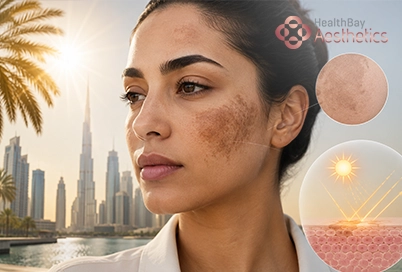
Melasma is a common skin condition that causes dark facial patches and often recurs in Dubai due to year-round UV exposure, heat, humidity, and hormonal triggers. While it cannot always be permanently cured, dermatologist-guided treatments, daily sun protection, and a personalised skincare routine can effectively control pigmentation and reduce recurrence.
If you've ever cleared your melasma only to watch it creep back a few months later, you're not imagining things, and you're definitely not alone. Melasma is one of the most common reasons patients walk into our clinic in Dubai, and it's also one of the most misunderstood skin conditions. Many people assume a single treatment session will fix it for good. In a climate like Dubai's, that's rarely how melasma works.
Understanding why melasma is so persistent here, and what it actually takes to manage it, can save you months of frustration, money, and disappointment with treatments that were never going to hold up against year-round sun exposure.
Melasma is a chronic skin condition that causes brown or greyish-brown patches, most commonly on the cheeks, forehead, upper lip, and chin. It develops when melanocytes, the pigment-producing cells in your skin, become overactive and produce excess melanin in concentrated areas.
Unlike a suntan or simple sunspot, melasma isn't just a cosmetic surface issue. It's driven by a combination of internal and external triggers, which is exactly why it's so difficult to treat with a one-time fix. It tends to affect women more than men, is strongly linked to hormonal changes, and is significantly more common in people with medium to darker skin tones, which describes a large portion of Dubai's population.
Dubai has almost the perfect environmental storm for melasma to develop and persist. Here's why.
Dubai sees intense sun for most of the year, with UV index levels frequently reaching "very high" to "extreme" even in cooler months. UV radiation is the single biggest trigger for melasma. It stimulates melanocytes directly and also worsens existing pigmentation every time skin is exposed, even through short walks to the car or sitting near a sunny window.
It's not just UV light. Heat itself has been shown to stimulate pigment-producing cells through a process separate from sun exposure. Combined with humidity, this creates a double trigger - one most people don't even think to protect against, since they associate melasma purely with sunlight.
Many residents move between heavily air-conditioned indoor spaces and intense outdoor heat multiple times a day. This constant temperature shifting, combined with incidental sun exposure during commutes, school runs, and outdoor dining, adds up to far more cumulative UV and heat exposure than people realize.
Emerging research shows that high-energy visible (HEV) light - the kind emitted by phone screens, laptops, and indoor LED lighting - can also worsen melasma in those already predisposed to it. In a region where digital screen time is high, this is a frequently overlooked contributor.
Pregnancy, birth control, and hormone therapy are well-documented melasma triggers. Combined with Dubai's climate factors above, hormonally predisposed skin has very little chance to "reset" without deliberate, consistent management.
This is the question we hear most often: "I did a treatment and it worked, so why is it back?"
The honest answer is that melasma is a manageable condition, not a curable one. Here's why recurrence is so common, especially in Dubai:
Once melanocytes in an area have been triggered into overproduction, they remain more sensitive to future UV and heat exposure, even after pigmentation clears.
Patients often stop diligent sun protection the moment their skin looks clear, which is precisely when the skin is most vulnerable to relapse.
Certain lasers and peels, if too intense or poorly matched to the patient's skin type, can trigger post-inflammatory hyperpigmentation - making melasma appear worse than before.
Treating the pigment on the surface without managing hormonal factors, heat exposure, or visible light exposure means the root cause is still active.
Melasma responds best to a maintenance mindset rather than a single intervention. Gaps in a skincare or treatment routine, even for a few weeks during travel or a busy period, can be enough for pigment to return.
The good news is that with the right, climate-aware approach, melasma is very manageable. At HealthBay Aesthetics, our approach starts with an accurate diagnosis of your melasma type and depth before recommending a plan, since one-size-fits-all treatment is one of the main reasons melasma keeps returning.
Prescription-strength ingredients such as hydroquinone, tranexamic acid, azelaic acid, and retinoids remain a foundation of melasma management. These are typically combined and rotated under dermatologist supervision to avoid irritation, which itself can worsen pigmentation.
Customized peels can help lift surface pigmentation and encourage healthier skin turnover. The key word is customized, overly aggressive peels can inflame the skin and trigger more pigmentation in melasma-prone patients, so peel strength and type need to be carefully matched to your skin tone and melasma pattern. Learn more about our approach to chemical peeling.
Rather than a single laser type, effective melasma management often combines several modalities over time, adjusted as your skin responds. Our pigmentation treatments are tailored specifically to melasma-safe protocols, since not every pigmentation laser is appropriate for melasma.
Non-aggressive light-based treatments can help calm inflammation and support even skin tone without the heat-driven risk of triggering more pigmentation. Our Dermalux sessions are often used as a gentler, maintenance-friendly option alongside other treatments.
A compromised skin barrier makes melasma harder to control. Treatments that support overall skin health and hydration, such as Profhilo or skin boosters, can complement pigment-focused treatments by improving the skin's resilience against heat and environmental stress.
Treatment gets melasma under control. Daily habits are what keep it that way, especially in a climate like Dubai's.
If you're noticing new or worsening patches of pigmentation, or if the melasma you thought was resolved is starting to reappear, it's worth having your skin properly assessed rather than trying another over-the-counter product. Melasma can resemble other pigmentation conditions, and treating it incorrectly often makes it more resistant to future treatment.
A qualified dermatologist can identify how deep the pigmentation sits in your skin, which is one of the biggest factors in choosing the right treatment combination - and in setting realistic expectations for how long results will last in Dubai's climate.
1. Can melasma be cured permanently? Melasma is best described as manageable rather than curable. Because the melanocytes involved remain sensitive to triggers like UV light, heat, and hormones, most dermatologists focus on long-term control rather than promising a permanent, one-time cure. With consistent sun protection and periodic maintenance treatments, many patients keep their skin clear for years at a time.
2. Does melasma get worse in summer? Yes. Because UV intensity and heat levels are both major triggers, melasma typically worsens during Dubai's hottest, sunniest months and can appear more stable during cooler periods. This is why treatment plans are often adjusted seasonally, with more intensive intervention in cooler months and a stronger focus on protection and maintenance during summer.
3. Is melasma the same as sunspots or age spots? No. Sunspots and age spots are typically caused by cumulative sun damage over time and tend to appear as smaller, well-defined spots. Melasma usually appears as larger, symmetrical patches, is more closely tied to hormonal factors, and tends to be more resistant to treatment. An accurate diagnosis is important because the two conditions often require different treatment approaches.
4. Can men get melasma too? Yes, although it's significantly less common in men. When it does occur, it's usually linked to sun exposure rather than hormonal factors, and treatment principles remain broadly similar.
5. How long does it take to see results from melasma treatment? This varies depending on how deep the pigmentation sits in the skin and which treatment combination is used, but most patients begin noticing visible improvement within several weeks of starting a consistent, dermatologist-guided plan. Full results, and understanding how well they'll hold, generally become clearer after a few months of combined treatment and maintenance.
6. Does makeup make melasma worse? Makeup itself doesn't cause melasma, but heavy makeup use can sometimes mask early signs of worsening pigmentation, delaying treatment. Additionally, some makeup removal routines involve friction or harsh cleansing that can irritate melasma-prone skin, so a gentle skincare routine matters as much as the treatment itself.
7. Is melasma linked to stress? While stress isn't a primary trigger the way UV light and hormones are, elevated stress can influence hormonal balance in ways that may indirectly affect melasma. Managing overall wellbeing is generally considered a supportive factor rather than a standalone treatment.
Melasma isn't a condition you defeat once and forget about - especially in a climate that gives it every opportunity to return. The patients who manage it most successfully are the ones who treat it as an ongoing partnership between professional treatment and daily sun discipline, rather than a single fix.
With the right combination of targeted treatments, climate-conscious skincare, and consistent sun protection, clear, even-toned skin is absolutely achievable and maintainable, even in Dubai.
Book an appointment with our specialist dermatologists at HealthBay Aesthetics and get a treatment plan built around your skin, not a generic protocol.
Book an Appointment